


Bhaktapur Durbar Square is one of Nepal’s most historically significant and culturally vibrant heritage sites. Located in the ancient city of Bhaktapur in the Kathmandu Valley, this royal square represents centuries of Nepalese civilization, traditional Newari architecture, and living cultural practices. As a UNESCO World Heritage Site, Bhaktapur Durbar Square attracts historians, architects, pilgrims, and travelers from around the world.
Unlike many historical monuments that exist only as preserved ruins, Bhaktapur Durbar Square continues to function as a lively urban center where history, daily life, tourism, and tradition coexist harmoniously.
Historical Overview of Bhaktapur Durbar Square
Bhaktapur, historically known as Khwopa, was the capital of the Malla Kingdom between the 12th and 15th centuries. During this period, Bhaktapur developed into a well planned city with advanced art, architecture, and social systems.
The Durbar Square served as the political, religious, and administrative heart of the kingdom. Most of its major monuments were built by influential rulers such as King Yaksha Malla, King Bhupatindra Malla, and King Ranjit Malla, whose reigns marked the golden age of Bhaktapur.
Although earthquakes in 1934 and 2015 caused damage to several structures, careful restoration has preserved the original architectural style and historical integrity of the square.
Architectural Features and Newari Design
Bhaktapur Durbar Square is renowned for its traditional Newari architecture, distinguished by red brick structures, multi-tiered pagoda temples, and finely detailed wooden carvings.
Key architectural characteristics include:
-
Pagoda-style temples with layered roofs
-
Intricate wood carvings of deities, animals, and floral patterns
-
Stone sculptures and metal artwork
-
Open courtyards (chowks) used for rituals and royal activities
The craftsmanship reflects the deep artistic knowledge of Newari artisans, whose techniques have been passed down for generations.
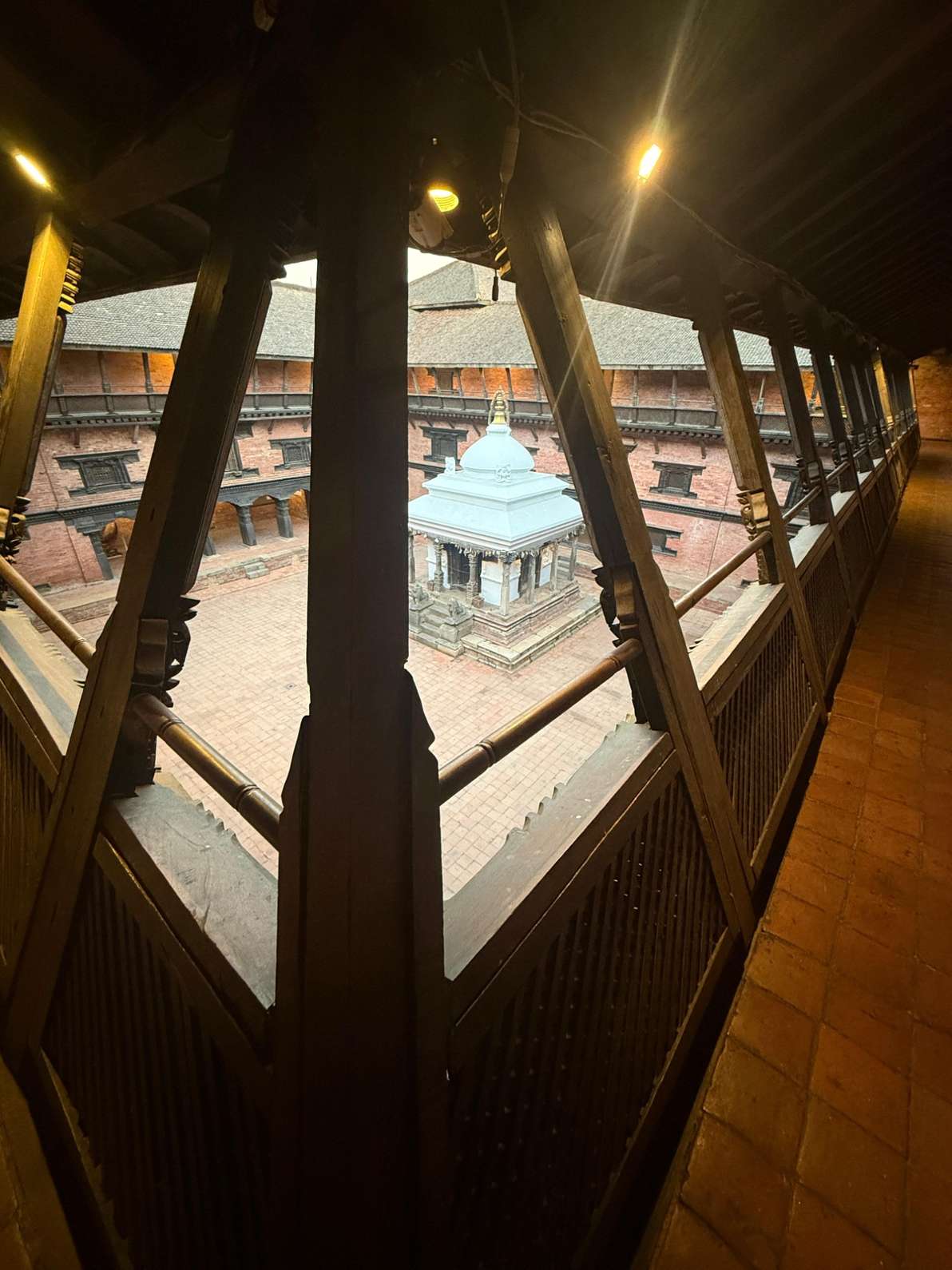

Major Attractions Within Bhaktapur Durbar Square
55-Window Palace
Built during the reign of King Bhupatindra Malla, the 55-Window Palace is a masterpiece of wood carving and once served as the royal residence.
Golden Gate (Sun Dhoka)
The Golden Gate is one of the most ornate entrances in Nepal, decorated with gold plated copper and religious symbols. It leads to the sacred Taleju Temple.
Taleju Temple
This royal temple, dedicated to Goddess Taleju, was constructed by King Mahendra Malla and remains one of the most important religious sites in Bhaktapur.
Vatsala Temple
A fine example of Shikhara style architecture, Vatsala Temple adds architectural diversity to the square.
National Art Museum
Housed inside the palace complex, the museum preserves ancient manuscripts, paintings, metal statues, and religious art from different historical periods.
Bhaktapur Then and Now: From Royal Courtyard to Modern Market
Historically, Bhaktapur Durbar Square was a royal and ceremonial space. Today, it has transformed into a vibrant public area surrounded by local markets, craft shops, cafés, and cultural centers.
Just outside the palace complex, visitors can explore:
-
Traditional pottery squares
-
Handicraft and souvenir markets
-
Local textile and metalwork shops
Unlike modern shopping malls, these markets preserve a traditional trading system where local artisans sell handmade goods. This blend of ancient heritage and modern economic activity makes Bhaktapur unique compared to other historic cities in Nepal.
Tourism and Visitor Experience
Bhaktapur Durbar Square is one of the most popular tourist destinations in Nepal. Visitors can enjoy:
-
Guided heritage walks
-
Museum visits
-
Cultural photography
-
Traditional music and dance performances
Compared to Kathmandu Durbar Square, Bhaktapur offers a calmer, more organized experience with cleaner streets and well-preserved monuments, making it ideal for cultural tourism.
Local Food and Traditional Cuisine
Bhaktapur is famous for its unique Newari cuisine, which adds another layer to the visitor experience.
Must-try local foods include:
-
Juju Dhau (King Curd) – a creamy yogurt unique to Bhaktapur
-
Chatamari – Newari rice crepe often called Newari pizza
-
Bara (Wo) – lentil pancakes
-
Yomari – sweet steamed dumplings filled with molasses
Many traditional restaurants around the Durbar Square serve authentic local dishes, allowing visitors to taste the city’s culinary heritage.
Local Culture and Festivals
Bhaktapur Durbar Square remains deeply connected to local life. Major festivals celebrated in and around the square include:
-
Bisket Jatra – the New Year festival of Bhaktapur
-
Gai Jatra – festival of remembrance
-
Dashain and Tihar celebrations
Daily rituals, temple offerings, and traditional music ensure that Bhaktapur’s culture remains alive and practiced rather than displayed.
How to Reach Bhaktapur Durbar Square
Bhaktapur is located approximately 13 km east of Kathmandu.
By Public Transport
-
Buses and microbuses run regularly from Ratna Park and Koteshwor to Bhaktapur.
By Private Vehicle or Taxi
-
Taxis and ride services offer convenient access and take about 30–45 minutes depending on traffic.
Entry Information
-
Foreign visitors are required to purchase an entrance ticket at the city gate, which contributes to heritage conservation.
Best Time to Visit
The best time to visit Bhaktapur Durbar Square is during:
-
Autumn (September–November) for festivals and clear weather
-
Spring (March–May) for pleasant temperatures and cultural activities
Early mornings and late afternoons are ideal for photography and peaceful exploration.
Why Bhaktapur Durbar Square Matters Today
Bhaktapur Durbar Square is not only a historical monument but also a model of sustainable cultural preservation. It demonstrates how heritage sites can support tourism, protect tradition, and sustain local communities at the same time.
Conclusion
Bhaktapur Durbar Square is a rare destination where Nepal’s royal history, traditional architecture, local markets, cuisine, and living culture come together. It offers visitors an immersive journey into Nepal’s past while remaining an active part of the present.
Plan Your Visit or Book a Tour
Explore Bhaktapur Durbar Square and iconic heritage and pilgrimage destinations across Nepal with One Globe Nepal — many destinations, one solution.
👉 Book now with us and experience Nepal’s living heritage.
0 Comment