
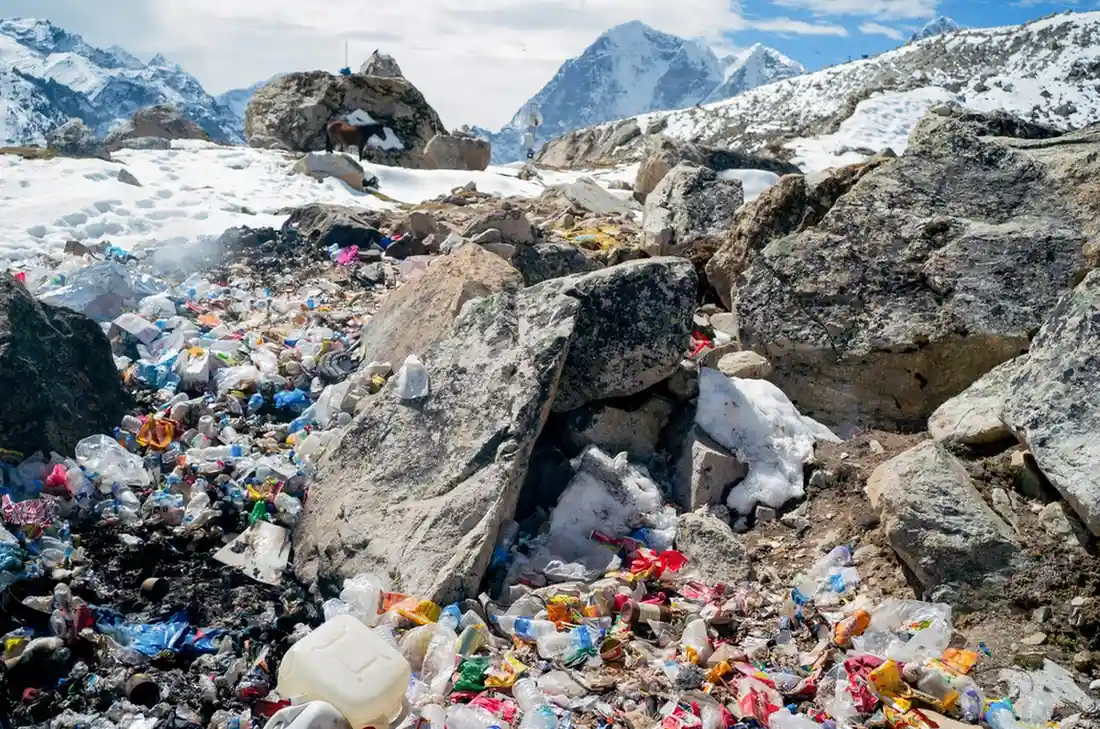

Mount Everest stands as the ultimate symbol of human ambition. Towering at 8,848.86 meters, it has inspired generations of climbers, dreamers, and adventurers. But beyond the breathtaking photographs and summit celebrations lies a quieter, unsettling story a growing environmental crisis unfolding on the roof of the world.
Today, Mount Everest is facing an uncomfortable truth: it is becoming one of the highest garbage dumps on Earth.
The Rise of Tourism on Mount Everest
When Sir Edmund Hillary and Tenzing Norgay first reached Everest’s summit in 1953, the mountain was remote, untouched, and deeply respected. Expeditions were rare, slow, and modest.
Fast forward to today, and Everest has become a global destination. Hundreds of climbers attempt the summit every year, supported by large teams, modern equipment, and commercial guiding companies. With increased access has come increased impact.
More people means more gear.
More gear means more waste.
And on Everest, nothing disappears.
What Kind of Garbage Is Found on Mount Everest?
Climbing Everest is not like hiking a trail. Everything climbers bring must survive extreme cold, violent winds, and life-threatening conditions. When gear breaks or oxygen runs out, items are often abandoned.
The mountain is littered with:
-
Empty oxygen cylinders
-
Torn tents and sleeping bags
-
Food packaging, cans, and plastic bottles
-
Broken ladders and ropes
-
Clothing, boots, and climbing equipment
-
Frozen human waste
Because temperatures remain below freezing for much of the year, this waste does not decompose. Instead, it becomes locked in snow and ice sometimes for decades.
The Death Zone: Where Survival Comes Before Cleanliness
Above 8,000 meters lies the “Death Zone,” where oxygen levels are dangerously low and the human body begins to shut down. Every step feels exhausting. Every decision is a matter of survival.
In this zone, climbers are not thinking about trash. Carrying waste back down requires strength, time, and oxygen resources that are critically limited. Many items are dropped with the intention of retrieving them later, but storms, exhaustion, or failed summits often make that impossible.
What remains behind slowly accumulates, season after season.
Human Waste on Everest: An Overlooked Crisis
One of the most serious and least visible problems on Everest is human waste.
Thousands of climbers and support staff spend weeks on the mountain each year. At Base Camp, waste management systems exist, but higher up the mountain, disposal becomes extremely difficult. Many climbers bury waste in snow or discard it into crevasses.
As glaciers melt due to climate change, this waste resurfaces, contaminating snow and water sources downstream. Rivers fed by Himalayan glaciers support millions of people turning Everest’s waste problem into a regional environmental and health concern.
Climate Change Is Revealing Everest’s Hidden Trash
Global warming has accelerated glacier melt across the Himalayas. On Everest, this melting ice is revealing layers of trash that were once buried deep beneath snowfields.
Old climbing gear, food packaging, and even decades old waste are emerging from the ice visual evidence of how long the problem has been ignored.
Everest is not just warming it is exposing humanity’s footprint.
The Impact on the Himalayan Environment and Local Communities
Everest is part of a fragile mountain ecosystem. Pollution threatens wildlife, soil, and water quality across the region.
Local Sherpa communities are especially affected. While they depend on tourism for income, they also bear the burden of cleanup. Sherpas often risk their lives carrying heavy loads of trash down dangerous slopes cleaning up a mess they did not create.
The mountain that provides livelihood has also become a responsibility they cannot escape.
Everest Cleanup Campaigns: Progress and Limitations
In recent years, the Nepali government and environmental organizations have launched cleanup campaigns on Everest. These efforts have removed tons of garbage, including oxygen cylinders and abandoned equipment.
New regulations require climbers to:
-
Bring back a set amount of waste
-
Pay refundable deposits tied to waste removal
-
Use human waste management systems at Base Camp
While these steps are important, cleanup remains extremely dangerous and expensive. Helicopter flights, skilled climbers, and favorable weather are required making prevention far more effective than removal.
Commercial Expeditions and Overcrowding on Everest
Commercialization has made Everest more accessible, but it has also increased environmental pressure. Large expedition groups generate more waste and rely heavily on Sherpa labor.
Critics argue that limiting climbing permits, raising fees, and enforcing stricter environmental standards are necessary to protect the mountain. Without regulation, Everest risks becoming a victim of its own popularity.
Who Is Responsible for Protecting Mount Everest?
The garbage problem on Everest is not just Nepal’s responsibility. Everest belongs to the world.
Climbers must adopt a strict “leave no trace” ethic. Tour operators must prioritize sustainability over profit. Governments must enforce regulations, and travelers must understand that visiting fragile environments comes with responsibility.
Everest is not just a destination it is a shared legacy.
Can Mount Everest Be Saved?
Mount Everest still inspires awe, humility, and respect. Cleanup efforts prove that action is possible, but the future of the mountain depends on prevention, education, and collective responsibility.
If humanity cannot protect the highest place on Earth, it raises a deeper question:
How well are we protecting the rest of the planet?
Everest does not need more climbers.
It needs more caretakers.
0 Comment